What is an ITIL Service Desk?
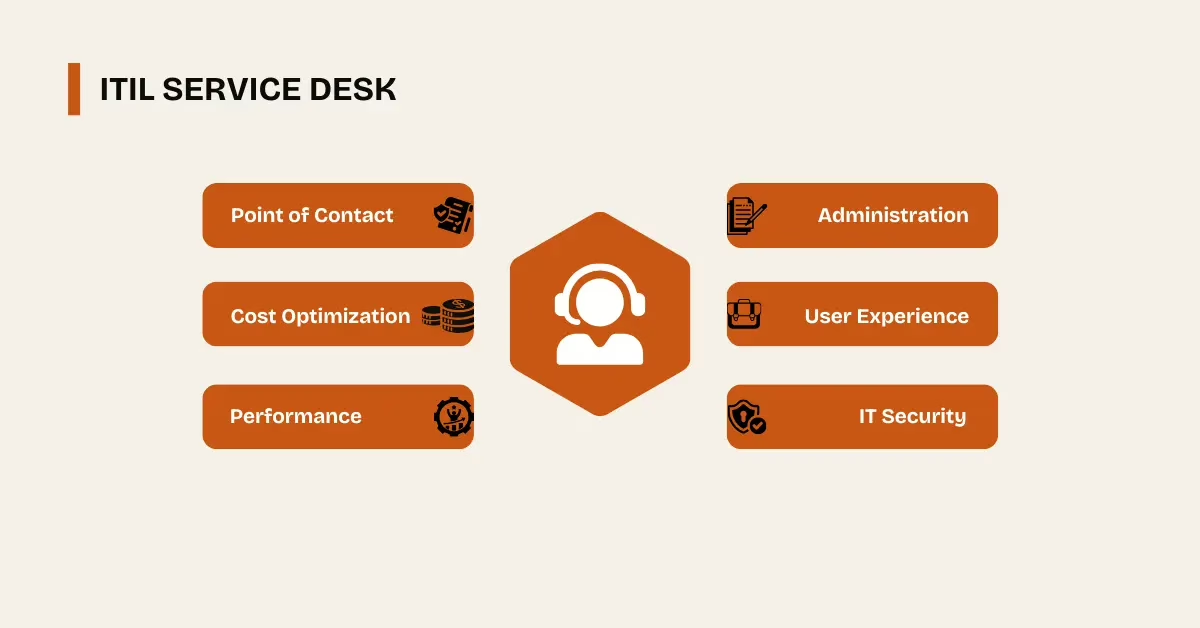
– An ITIL 4 service desk serves as the single point of contact between your organization and its users.
It handles IT service requests, incidents, and problems through structured processes. The service desk connects users with IT support services efficiently.
Service desk ITIL | Single Point of Contact for IT Services
The ITIL service desk functions as your organization’s IT communication center. Users contact the service desk for:
- Password resets and account issues
- Software installation requests
- Hardware problems and failures
- Access permissions and security concerns
- General IT inquiries and guidance
This centralized approach prevents users from contacting multiple IT teams directly. The service desk routes requests to appropriate specialists when needed.
Primary Goals and Objectives
Service desk ITIL 4 aims to restore normal service operations quickly. The main objectives include:
- Minimize business disruption from IT issues
- Improve user satisfaction through better support
- Reduce support costs via efficient processes
- Maintain accurate records of all IT activities
Help Desk vs Service Desk vs ITSM
Help Desk vs Service Desk Key Differences
Help desks focus on reactive support and fixing immediate problems. Service desks manage the complete service lifecycle and align with business objectives.
Key differences:
- Scope: Help desks fix problems; service desks manage services
- Approach: Help desks are reactive; service desks are proactive
- Integration: Help desks work alone; service desks connect with other IT practices
- Metrics: Help desks measure tickets; service desks track service quality
Service Desk vs ITSM Integration
IT Service Management (ITSM) encompasses all activities for delivering IT services. The service desk represents one component within the ITSM framework.
Popular ITSM platforms include:
- ServiceNow for enterprise service management
- Jira Service Management for agile organizations
- ManageEngine ServiceDesk Plus for mid-sized businesses
- SolarWinds Web Help Desk for smaller companies
Types of Service Desk Structures in ITIL
Centralized Service Desk
A centralized service desk operates from a single location. All support requests flow through this central point. This structure works well for organizations with limited geographic spread and standardized IT environments.
Virtual Service Desk
Virtual service desks combine multiple physical locations into one logical entity. Users contact a single number, but calls route to available agents across different locations. This provides extended coverage hours and improved resource utilization.
Local Service Desk
Local service desks operate within specific regions or business units. Each location maintains its own support team. This benefits organizations with diverse local requirements and multiple languages.
Follow-the-Sun Service Desk
Follow-the-sun service desks provide 24/7 support by passing work between different time zones. This model offers continuous service availability and faster resolution times for global organizations.
Core ITIL Service Desk Processes
The ITIL service desk operates through five essential processes that ensure consistent service delivery.
Incident Management Process
Incident management restores normal service operations as quickly as possible. An incident represents any unplanned interruption or reduction in IT service quality.
The incident workflow includes:
- Incident identification through user reports or monitoring
- Initial diagnosis and categorization
- Escalation procedures for complex issues
- Resolution activities by support teams
- Closure confirmation with users
Service desk analysts handle most incidents at the first level. Complex issues escalate to specialized teams.
Problem Management Process
Problem management identifies and eliminates root causes of recurring incidents. This proactive approach reduces overall incident volume.
Key activities include:
- Problem identification from incident patterns
- Root cause analysis using investigation methods
- Workaround development for temporary solutions
- Known error documentation in the knowledge base
- Change requests for permanent fixes
Change Management Process
Change management controls all modifications to IT infrastructure and services. All changes require proper authorization and testing.
Standard change types:
- Standard changes with pre-approved procedures
- Normal changes requiring approval
- Emergency changes for critical issues
- Change requests from problem management
Service Request Management
Service request management handles routine user requests that don’t involve service failures. Common requests include software installation, hardware provisioning, and access rights changes.
Many service requests use automated self-service portals where users submit requests through web interfaces or mobile apps.
Service Catalog Management
Service catalog management maintains a centralized directory of available IT services. The catalog provides users with service descriptions, request procedures, and service levels.
Users access the catalog through self-service portals that integrate with request management workflows.
ITIL Service Desk Implementation Stages
Organizations implement ITIL 4 service desk capabilities through a structured five-stage approach.
Service Strategy Planning
Service strategy defines the overall direction for service desk implementation. Key activities include business case development, stakeholder identification, and resource allocation.
The strategy phase aligns service desk capabilities with business requirements and establishes success measures.
Service Design Architecture
Service design creates detailed specifications for processes, technology, and organizational structures. This stage includes process workflows, technology selection, and service level agreements.
ITIL 4 service desk software selection occurs during this phase. Organizations evaluate platforms like ManageEngine ServiceDesk, ServiceNow, and Jira Service Management.
Service Transition Setup
Service transition prepares the organization for operations through staff training, process testing, and technology deployment.
Transition activities include staff recruitment, training programs, pilot testing, and data migration from existing systems. ITIL 4 Practitioner certifications help staff understand best practices.
Service Operation Deployment
Service operation represents active service delivery where the service desk handles real user requests. This focuses on consistent process execution and performance monitoring.
Operational activities include ticket system management, user communication, performance tracking, and knowledge base maintenance. Dashboards provide real-time visibility into service performance.
Continual Service Improvement
Continual service improvement ensures the service desk evolves to meet changing business requirements through ongoing optimization.
Improvement initiatives include performance analysis using KPIs, user feedback collection, process optimization, and staff development. Customer satisfaction surveys provide user perspective on service quality.
Service Desk Roles and Responsibilities
ITIL service desk operations require clearly defined roles with specific responsibilities.
Service Desk Analyst
Service desk analysts serve as the primary user contact point. They handle incoming requests, provide initial diagnosis, and resolve first-level issues.
Key responsibilities:
- User communication through phone, email, and chat
- Ticket creation and categorization
- Basic troubleshooting for common issues
- Status updates throughout resolution
Service Desk Manager
Service desk managers oversee daily operations and team performance. They ensure service level compliance and drive improvement initiatives.
Main duties:
- Team management and performance monitoring
- SLA compliance tracking and reporting
- Process improvement identification
- Stakeholder communication and relationship management
Incident Manager
Incident managers coordinate major incident response and ensure timely resolution for high-impact issues.
Problem Manager
Problem managers investigate recurring issues and identify permanent solutions through root cause analysis.
Change Manager
Change managers control all modifications to IT infrastructure, balancing business needs with operational stability.
ITIL Service Desk Best Practices
Self-Service Portal Implementation
Self-service portals reduce ticket volume while improving user experience. Key features include service catalog integration, knowledge base articles, status tracking, and chatbots for basic questions.
Ticket Categorization and Prioritization
Proper categorization ensures tickets route to appropriate teams quickly. Common categories include hardware issues, software problems, network connectivity, and service requests.
Priority levels reflect business impact and urgency for appropriate response times.
Knowledge Base Management
Comprehensive knowledge bases improve first-call resolution rates. Effective management includes solution articles, troubleshooting guides, and known error records from problem management.
SLA Management and Monitoring
Service level agreements define performance expectations. Effective management includes response time targets, resolution timeframes, and availability commitments with regular performance reviews.
Proactive Problem Prevention
Proactive approaches reduce incident volumes through trend analysis, automated monitoring, predictive analytics, and user education programs.
Service Desk Technology and Automation
ITIL Service Desk Software Selection Criteria
Organizations should evaluate best ITIL service desk software based on ITIL process alignment, integration capabilities, scalability, and mobile accessibility.
Popular platforms include ServiceNow, Jira Service Management, ManageEngine ServiceDesk Plus, and SolarWinds Web Help Desk.
AI and Machine Learning Integration
Artificial intelligence transforms operations through automated ticket routing, chatbot interactions, predictive problem detection, and knowledge suggestion for analyst support.
Automation Impact on Service Desk Operations
Automation reduces manual effort through password reset workflows, software deployment, system monitoring, and ticket escalation based on defined rules.
What impact does automation have on a service desk ITIL? Automation typically reduces routine work by 30-50%, allowing analysts to focus on complex issues.
Measuring Service Desk Performance
Key Performance Indicators (KPIs)
Essential KPIs include:
- First call resolution rate measures analyst effectiveness
- Average resolution time indicates process efficiency
- SLA compliance percentage demonstrates reliability
- Cost per ticket tracks operational efficiency
Customer Satisfaction Metrics
Customer satisfaction measurement includes post-resolution surveys, quarterly satisfaction surveys, Net Promoter Score, and user feedback through multiple channels.
Mean Time to Resolution (MTTR)
MTTR measures average time from incident report to resolution. Analysis should consider priority level variations, escalation impact, and knowledge base effectiveness.
Conclusion
ITIL 4 service desk implementation requires careful planning, proper role definition, and continuous improvement focus. Organizations that follow proven best practices, invest in appropriate technology, and measure performance consistently achieve higher user satisfaction and operational efficiency. Success depends on balancing automation capabilities with human expertise while maintaining clear communication channels and service level commitments.
Frequently Asked Questions
What certifications do service desk staff need?
ITIL 4 Foundation certification provides essential knowledge for all service desk roles. Analysts benefit from basic technical certifications, while managers should pursue ITIL 4 Practitioner credentials.
How much does ITIL service desk software cost?
Costs range from $10-50 per user monthly for basic platforms to $100+ for enterprise solutions. ServiceNow and ManageEngine ServiceDesk Plus offer different pricing tiers based on features and user volumes.
Can small businesses implement ITIL service desk practices?
Small businesses can adopt simplified ITIL practices using affordable tools like Jira Service Management or SolarWinds Web Help Desk. Focus on core processes rather than complete framework implementation.
What languages should service desk support?
Support multiple languages based on user demographics. Many ITSM platforms provide multilingual interfaces and automated translation for global organizations.
How long does service desk implementation take?
Basic implementations require 3-6 months for planning, setup, and training. Complex enterprise deployments may take 12-18 months including integration with existing systems and CMDB configuration.
Should service desk operate 24/7?
Operating hours depend on business requirements and user locations. Follow-the-sun models work well for global organizations, while local businesses may operate during standard hours.
What backup procedures are needed for service desk?
Maintain backup communication channels, alternative ITSM tools access, and documented escalation procedures. Dameware Remote Support and Microsoft Teams provide redundant communication options during system outages.