
What is the ITIL Capability Maturity Model?
The ITIL Capability Maturity Model is “an IT service management (ITSM) assessment instrument that can be used by teams at any point in their ITSM journey” according to Beyond20, an Elite Axelos Consulting Partner. The tool helps organizations to assess their service management and governance maturity, as confirmed by Axelos when they launched the updated model in September 2021.
The ITIL Capability Maturity Model helps your organization measure how well you deliver IT services. Think of it as a report card for your service management capabilities. This Axelos ITIL maturity model shows where you excel and where you need improvement.
Beyond Individual Process Assessment
Most organizations check their processes one at a time. Incident Management works great, but Change Management struggles. This creates siloed processes that don’t work together well.
The ITIL maturity model looks at your entire service management ecosystem. It examines how your team connects different practices and tools. This comprehensive approach reveals the real picture of your organization’s capabilities.
Your clients and customers don’t care about individual processes. They want reliable services that solve their business challenges. The maturity framework helps you see things from their perspective.
The Four Dimensions of Service Management
The ITIL 4 Service Value System includes four key dimensions that affect your success:
- Organizations and people – Your staff, skills, and leadership
- Information and technology – Your toolsets and data management
- Partners and suppliers – Your external collaborators
- Value streams and processes – Your workflows and service management methods
Each dimension connects to the others. Great people need good tools to succeed. Amazing technology fails without skilled employees to use it. The assessment looks at all four dimensions together.
Service Value System Integration
Your SVS connects every part of your ITIL adoption. It starts with guiding principles and includes governance, the service value chain, practices, and continual improvement efforts.
The Service Value System shows how value flows through your organization. It begins with opportunities and demand. It moves through your service value chain. It ends with value for customers and stakeholders.
The ITSM assessment identifies where this flow breaks down. Maybe your Request Fulfillment process works fine, but your Change Management creates bottlenecks. The model helps you spot these connection problems.
ITIL 4 Maturity Model Framework Structure
The ITIL 4 maturity model uses a clear structure to measure your level of progress. It combines capability levels with maturity criteria. This elegant model gives you detailed feedback about your current state.
Capability vs Maturity Criteria
Capability measures what your team can do right now. Maturity measures how consistently you perform over time. Your organization might have high capability but low maturity if results vary too much.
The practice capability assessment examines these areas:
- Process definition – How well you document procedures
- Resource allocation – Whether you have skilled people
- Tool implementation – How effectively you use technology
- Performance measurement – Your ability to track improvement
Maturity criteria focus on consistency:
- Standardization – How uniform your practices are across teams
- Optimization – Your ability to continuously improve
- Integration – How well different practices work together
- Governance – Your control and oversight methods
The Five Maturity Levels Explained
The maturity scale includes five distinct levels:
Level 1: Initial Your processes exist but lack formal structure. Teams work differently. Results vary widely between people and projects.
Level 2: Managed You have basic processes with some documentation. Teams follow similar approaches, but practices aren’t standardized across your organization.
Level 3: Defined Your processes are well-documented and standardized. All teams follow the same procedures. You have clear roles and responsibilities.
Level 4: Quantitatively Managed You measure process performance consistently. You use data to make decisions. You can predict outcomes based on historical trends.
Level 5: Optimizing You continuously improve based on data and feedback. Your organization adapts quickly while maintaining service quality.
Assessment Methods That Work
The assessment of practice maturity uses several techniques to evaluate your current state. These methods provide evidence of maturity that assessors can verify.
Document review examines your policies and procedures. Assessors check if teams actually use these documents. They look for adherence to ITIL guidance and standards.
Interviews with staff reveal how well people understand your processes. These conversations uncover gaps between documentation and actual practice. They identify where additional training might help.
Data analysis reviews your performance metrics. Assessors examine trends and compare results against benchmarking reports. This quantitative evidence supports the overall maturity rating.
AXELOS Components and Assessment Types
The Axelos ITIL maturity model includes specific components that work together. These key elements provide a complete picture of your service management effectiveness.
Service Value System Assessment
The ITIL 4 Service Value System assessment examines how well you create value. This evaluation goes beyond individual practices to look at your entire approach.
Your SVS includes several elements that assessors evaluate:
- Guiding principles – How well teams apply ITIL principles
- Governance – Your oversight and decision-making processes
- Service value chain – How efficiently you move from demand to value
- Practices – Your 34 management practices and their effectiveness
- Continual improvement – Your ability to learn and adapt
Strong governance means nothing if your practices don’t align with your principles. The assessment measures how these elements connect and support each other.
34 Management Practices Evaluation
ITIL 4 includes 34 management practices. The maturity assessment doesn’t require all practices. It focuses on those most relevant to your organization’s goals.
Critical practices for most organizations include:
- Continual improvement
- Incident Management
- Change Management
- Request Fulfillment
- Service level management
- Problem management
The practice capability assessment examines each selected practice individually. Then it looks at how practices work together to deliver value to customers.
Why Continual Improvement Matters
Every ITIL assessment must include continual improvement. This requirement reflects its central role in the ITIL 4 approach. Organizations that don’t actively improve fall behind competitors.
The continual improvement assessment covers:
Improvement culture – Whether your teams actively look for better ways to work. This includes psychological safety that allows people to suggest changes.
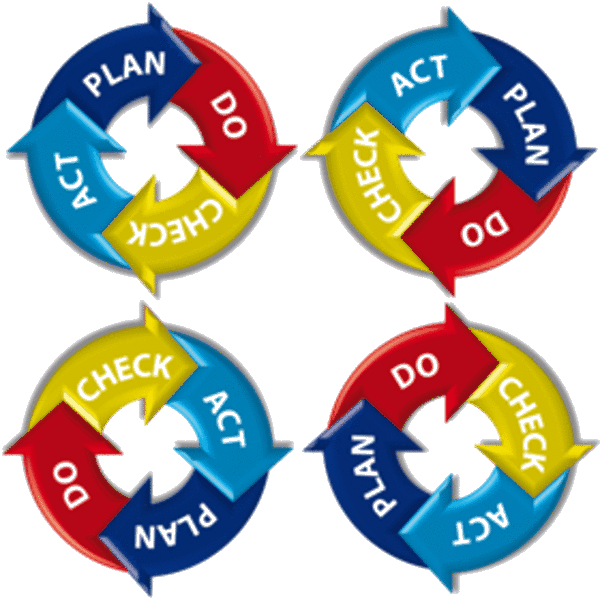
Improvement methods – Your use of structured approaches like Plan-Do-Check-Act cycles or agile techniques.
Improvement measurement – How you track the success of improvement efforts.
Assessment Options and Benefits
Organizations can choose from different types of ITIL maturity assessments based on their needs and goals.
Official vs Custom Assessments
Official ITIL assessments follow strict guidelines set by Axelos. Only certified ITIL Maturity Assessors can conduct these assessments. They provide standardized results you can compare against industry benchmarking reports.
Custom evaluations offer more flexibility. Internal teams or consultants can design these to focus on specific concerns. They work well for measuring progress between official assessments.
Elite Consulting Partners
Elite Axelos Consulting Partners represent the highest level of ITIL expertise. These organizations have demonstrated exceptional knowledge in ITIL implementations.
Working with an Elite Axelos Consulting Partner provides:
- Deep expertise in ITIL best practices
- Experience with organizations similar to yours
- Access to latest ITIL guidance
- Ongoing support beyond the initial assessment
Internal vs External Assessment
Internal assessments use your own staff to evaluate maturity levels. This approach costs less and provides good learning opportunities. However, internal assessors might miss issues that outsiders would catch.
External assessments bring independent perspective and specialized expertise. External assessors identify blind spots that internal teams miss. Many companies combine both approaches.
Change Management Maturity Benefits
The ITIL change management maturity model provides specific benefits that help organizations implement changes safely and efficiently.
Organizational Growth Driver
Mature change management processes enable organizations to adapt quickly to market changes. When you can implement changes reliably, you respond faster to customer needs.
Organizations with mature change management report:
- Faster time to market for new services
- Reduced risk when implementing business changes
- Better resource utilization through improved planning
- Increased confidence in making strategic changes
Process Integration Improvement
The maturity model helps organizations connect change management with other ITIL practices. This integration reduces duplication and creates smoother workflows.
Key integration points include:
- Release management – Coordinating changes with software releases
- Configuration management – Updating items affected by changes
- Problem management – Implementing permanent fixes
- Service design – Incorporating change requirements
Service Quality Enhancement
Mature change management directly improves service quality. It reduces failed changes and their impact on customers. The maturity assessment identifies specific areas where change processes can be strengthened.
Quality improvements include:
- Fewer emergency changes through better planning
- Reduced service outages caused by failed changes
- Faster recovery when changes cause problems
- Better customer communication about planned impacts
Implementation Process
Implementing an IT maturity assessment requires careful planning. Organizations that prepare well get better results and more actionable recommendations.
Current State Analysis
The first step involves analyzing your current state. This analysis provides the baseline for measuring progress.
Process mapping documents how work flows through your organization. This often reveals differences between documented procedures and actual practice.
Stakeholder interviews gather perspective from people at different levels. These reveal how well processes work from different viewpoints.
Performance data analysis examines your current metrics. This identifies trends and areas where performance doesn’t meet expectations.
Gap Identification
Gap analysis compares your current state against ITIL best practices. This comparison identifies specific areas needing improvement.
Capability gaps occur when your organization lacks skills, tools, or processes needed for desired outcomes. These often require training or tool purchases.
Performance gaps happen when you have the right capabilities but don’t use them consistently. These typically require better management or clearer procedures.
Baseline Establishment
Establishing a clear baseline helps you measure progress over time. The baseline should include both quantitative metrics and qualitative assessments.
Quantitative baselines include:
- Incident resolution times and first-call resolution rates
- Change success rates and emergency change frequency
- Service availability and performance metrics
- Customer satisfaction scores
Qualitative baselines capture:
- Process consistency across teams
- Staff confidence in following procedures
- Management support for service management initiatives
- Cultural readiness for improvement efforts
Conclusion
The ITIL Capability Maturity Model gives you the foundation to start or improve your organization’s service management assessment efforts. The model offers a structured approach to measuring current capabilities and planning future improvements that deliver real value to your customers and stakeholders.
Frequently Asked Questions
Who should conduct the assessment?
Both internal self-assessments and external evaluations by certified partners are valuable. External assessors provide objectivity and industry benchmarking, while internal reviews are good for continuous monitoring.
What’s the difference between capability and maturity?
Capability measures if a process exists and functions. Maturity measures how well it is integrated, consistently applied, and improved over time.
Do we need to implement all 34 ITIL practices?
No. The assessment focuses on the practices most critical to your organization’s specific goals and services.
What happens after we get our maturity score?
The score is a baseline. It should be used to build a prioritized continual improvement plan to address gaps and enhance service value.
Is this model only for mature ITIL organizations?
No. It’s designed for all stages, providing a starting benchmark for beginners and a roadmap for advanced teams to optimize further.