
Businesses today face unprecedented challenges. Markets shift overnight, customer expectations evolve rapidly, and technology disrupts entire industries. Traditional HR practices often fall short. They can’t keep up with the pace of change. That’s where Agile HR steps in.
Why Agile HR is Essential for Modern Businesses
Agile HR is a must for companies that want to succeed today. Here’s why:
- Adapting to Rapid Change: Old-school HR processes are stiff and slow. Agile HR brings flexibility. It lets HR teams act fast—whether scaling up during growth or shifting gears in a crisis.
- Enhancing Employee Experience: Employees want more. They seek meaningful work, regular feedback, and growth opportunities. Agile HR puts people first. It builds a workplace that sparks collaboration and innovation.
- Supporting Organizational Agility: Companies need every team to move quickly. That includes HR. Agile HR helps businesses make sharp decisions and stay ahead. It’s about making the whole organization nimble.
What is Agile HR?
Agile HR is the application of Agile principles and practices to human resource management. It focuses on delivering value quickly, adapting to feedback, and continuously improving. Unlike traditional, linear HR models, Agile HR emphasizes flexibility, collaboration, and responsiveness to change.
So, what is Agile HR? Let’s break it down.
- Definition of Agile HR: Agile HR applies Agile methodology to human resources. It delivers value fast, adjusts based on feedback, and keeps improving. Unlike traditional HR’s step-by-step approach, Agile HR stays flexible.
- Agile for HR: This means making HR processes agile. Think sprints for recruitment or Kanban boards for projects.
- HR for Agile: Here, HR supports agile teams across the company. It develops agile leaders and builds an agile culture.
Key Principles of Agile HR
Agile HR follows clear principles:
- Human-Centric Value: People come first. Policies and processes focus on employees as the top priority.
- Incremental Development: Small, frequent updates beat big annual projects. This keeps HR aligned with business needs.
- Collaboration Over Silos: Agile HR connects teams. It encourages open communication across departments.
- Embracing Failure and Learning: Failure teaches lessons. Agile HR experiments, gathers feedback, and improves.
- Continuous Improvement: Agile HR never stops evolving. It always looks for better ways.
- Modern Agile in HR: Tools like Design Thinking and Lean principles shape HR processes.
Co-creating Employee Experience in Agile HR
Agile HR invites employees to shape their own workplace. It’s about teamwork and input. For example, Design Thinking workshops can revamp onboarding. Employees might even help set performance goals.
Evidence-based Decision Making in Agile HR
Data drives Agile HR. HR analytics track metrics and guide strategies. Decisions rely on facts, not guesses.
- Managing HiPPOs: HiPPO means “Highest Paid Person’s Opinion.” Traditional HR often bows to top voices. Agile HR uses data instead. Evidence matters more than rank.
How to Implement Agile HR
Implementing Agile HR requires a clear plan and the right tools. Here’s how to get started:
Steps to Adopt Agile in HR
- Define the Problem
Identify specific HR challenges that need improvement. For example, slow recruitment processes or outdated performance management systems. - Allocate Resources and Define Roles
Determine the resources needed—time, budget, and personnel. Assign clear roles, such as a Scrum Master or Product Owner, adapted for HR projects. - Set Goals and Objectives
Establish measurable goals that align with business objectives. For instance, reduce time-to-hire by 20% within six months. - Start with Sprints
Break HR projects into short sprints (2-4 weeks). Each sprint should deliver specific outcomes, like a new onboarding module. - Incorporate Feedback and Iterate
After each sprint, gather feedback from stakeholders. Use it to improve the next sprint. This feedback loop is key to Agile HR success.
Tools and Techniques for Agile HR
- Kanban Boards
Visualize workflows and track progress. For example, a recruitment Kanban board can have columns like “Applications Received,” “Interview Scheduled,” and “Offer Extended.” - Scrum Frameworks
Use sprints to manage HR projects. Daily stand-ups keep teams aligned, and retrospectives help identify improvements. - Design Thinking
Apply this human-centered approach to solve HR problems. Use empathy maps to better understand employee needs. - Agile HR Cadence
Set regular rhythms, like weekly check-ins or monthly reviews, to maintain momentum and adaptability.
Establishing an Agile HR Operating Model
- Rethink Structures
Move from rigid hierarchies to fluid, cross-functional teams. Create HR squads focused on areas like talent acquisition or employee engagement. - Foster Collaboration
Encourage open communication within HR and across departments. Tools like Slack or Microsoft Teams can help. - Embrace Flexibility
Be ready to pivot based on feedback and business needs. Adjust HR policies or processes quickly when necessary.
Transitioning from Waterfall to Agile in HR
- Understand the Differences
Waterfall is linear and slow. Agile is iterative and fast. For example, Waterfall might plan an entire annual performance review upfront, while Agile tests and refines it in cycles. - Why Agile is Better
Agile allows quick adjustments based on real-time feedback. It promotes continuous improvement and employee involvement—crucial in today’s fast-paced world.
Using Agile for Risk Management in HR
- Identify Risks Early
Sprints help spot issues sooner. For example, if a new onboarding process fails, adjust it in the next sprint instead of waiting months. - Mitigate Risks
Regular reviews and retrospectives help teams learn from mistakes and prevent them from recurring. This reduces major setbacks.
Integrating PDCA Cycles in Agile HR
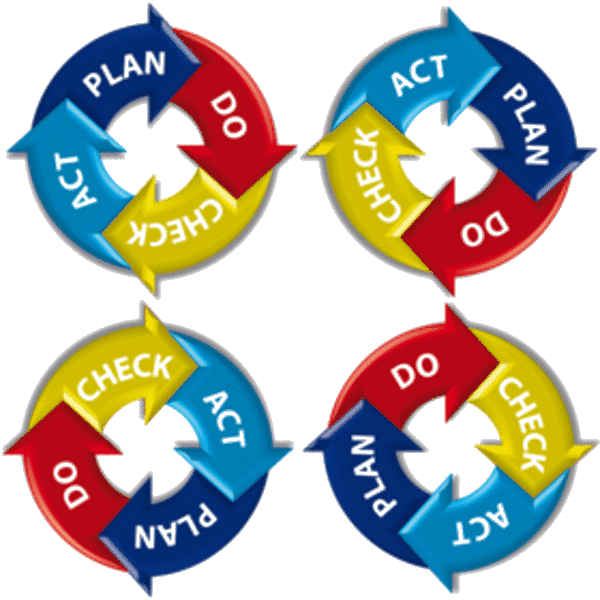
PDCA (Plan-Do-Check-Act) aligns perfectly with Agile:
- Plan: Set goals and plan the sprint.
- Do: Execute the plan.
- Check: Review outcomes and gather feedback.
- Act: Use feedback to improve the next sprint.
- Repeat: Continue this cycle for ongoing improvement.
Certifications and Training for Agile HR
- Overview of Certifications
Options include:
- Agile HR Certified Practitioner
- ICP-AHR from ICAgile
- Certifications from SHRM or CertiProf
- Benefits of Certification
- Gain a deeper understanding of Agile principles.
- Learn practical tools and techniques.
- Enhance your credibility as an HR professional.
- Who Should Pursue Certification
- HR professionals looking to upskill.
- Agile coaches working with HR teams.
- Organizations transforming their HR functions.
Agile HR Practices in Action
Here’s how Agile HR transforms key HR functions:
- Agile Recruitment
- Use sprints to fill positions faster.
- Create candidate personas for better targeting.
- Implement continuous feedback loops with hiring managers.
- Agile Onboarding
- Break onboarding into modules, delivered over time.
- Use feedback to refine the process for each new hire.
- Incorporate gamification to engage new employees.
- Agile Performance Management
- Replace annual reviews with regular, informal check-ins.
- Set short-term goals that align with business needs.
- Use peer feedback for a 360-degree view.
- Agile Learning and Development
- Offer microlearning modules for just-in-time training.
- Use employee feedback to shape learning programs.
- Encourage cross-functional training for broader skill sets.
Benefits of Agile HR
Agile HR delivers clear advantages:
- Improved Flexibility and Responsiveness
HR can adapt quickly to business changes, like scaling teams or shifting strategies. - Better Employee Engagement and Experience
Employees feel heard and valued, leading to higher satisfaction and retention. - Enhanced Support for Business Agility
HR becomes a strategic partner, helping the entire organization stay nimble and competitive.
Overcoming Challenges in Agile HR
Implementing Agile HR isn’t without hurdles:
- Resistance to Change
Some employees may resist new ways of working. Address this with clear communication and training. - Complexity of HR Processes
HR deals with legal and compliance issues. Ensure Agile methods still meet these requirements. - Collaborating with Non-Agile Departments
Align with other teams by sharing Agile principles and finding common ground. - Focusing on Mindset over Frameworks
Agile is a mindset, not just a set of tools. Encourage a culture of experimentation and learning.
The Future of Agile HR
Agile HR is here to stay. Here’s what to expect:
- Emerging Trends
- Increased use of AI and data analytics for decision-making.
- Greater focus on employee well-being and mental health.
- More remote and hybrid work models, requiring agile HR solutions.
- Predictions for HR in Agile Organizations
- HR will become more strategic, less administrative.
- Agile HR will drive innovation in people management.
- Organizations will prioritize agility as a core competency.
- Resources for Continuous Learning
- Agile HR Community: Join forums and groups for peer support.
- Certifications: Pursue Agile HR certifications for deeper knowledge.
PDCA Consulting’s Role in Agile HR Success
PDCA Consulting supports Agile HR with practical, hands-on guidance with 20+ years of experience..
- Custom Agile HR Plans: Frameworks tailored to your HR needs.
- Skill-Building Workshops: Training in Agile HR methods.
- Data-Guided Decisions: Analytics to strengthen Agile HR.
- Team Support: Coaching and Training in person for seamless Agile HR adoption.
Learn how PDCA Consulting can enhance your Agile HR journey in the real world.
Conclusion
Agile HR is the future of people management. In a world where change is constant, businesses need HR to lead, not just react. By adopting Agile practices, HR can become a strategic partner that drives innovation, supports organizational goals, and creates a workplace where people thrive.
Start small. Experiment with one HR process, like recruitment or onboarding. Use Agile tools, gather feedback, and improve step by step. The journey to Agile HR is about learning and adapting. Your organization—and your people—will thank you.
To find out more about PDCA Consulting’s expert consulting services or coaching either:
- Call +49 172 579 4719
- Complete the contact form
- Contact via LinkedIn
Frequently Asked Questions
How is Agile HR different from traditional HR?
Traditional HR often follows a rigid, top-down approach. Agile HR is flexible, involving employees in decision-making and using iterative processes to improve continuously.
What are the benefits of Agile HR?
Agile HR leads to faster decision-making, better employee engagement, and stronger alignment with business goals. It also helps HR teams stay ahead of industry changes.
How do I get started with Agile HR?
Begin by choosing one HR process, like onboarding. Use Agile methods like sprints to break it into smaller steps, gather feedback, and improve iteratively.
What are some common challenges in implementing Agile HR?
Challenges include overcoming resistance to change, ensuring compliance with legal requirements, and integrating Agile practices with non-Agile parts of the organization.
How does Agile HR impact employee experience?
Agile HR improves employee experience by prioritizing feedback, offering personalized development, and fostering a culture of trust and transparency.
What tools can I use for Agile HR?
Tools like Trello for Kanban boards, Jira for project management, and Slack for communication support Agile HR practices.
Is Agile HR only for large organizations?
No, Agile HR benefits organizations of all sizes. It’s about mindset and practices, not scale.