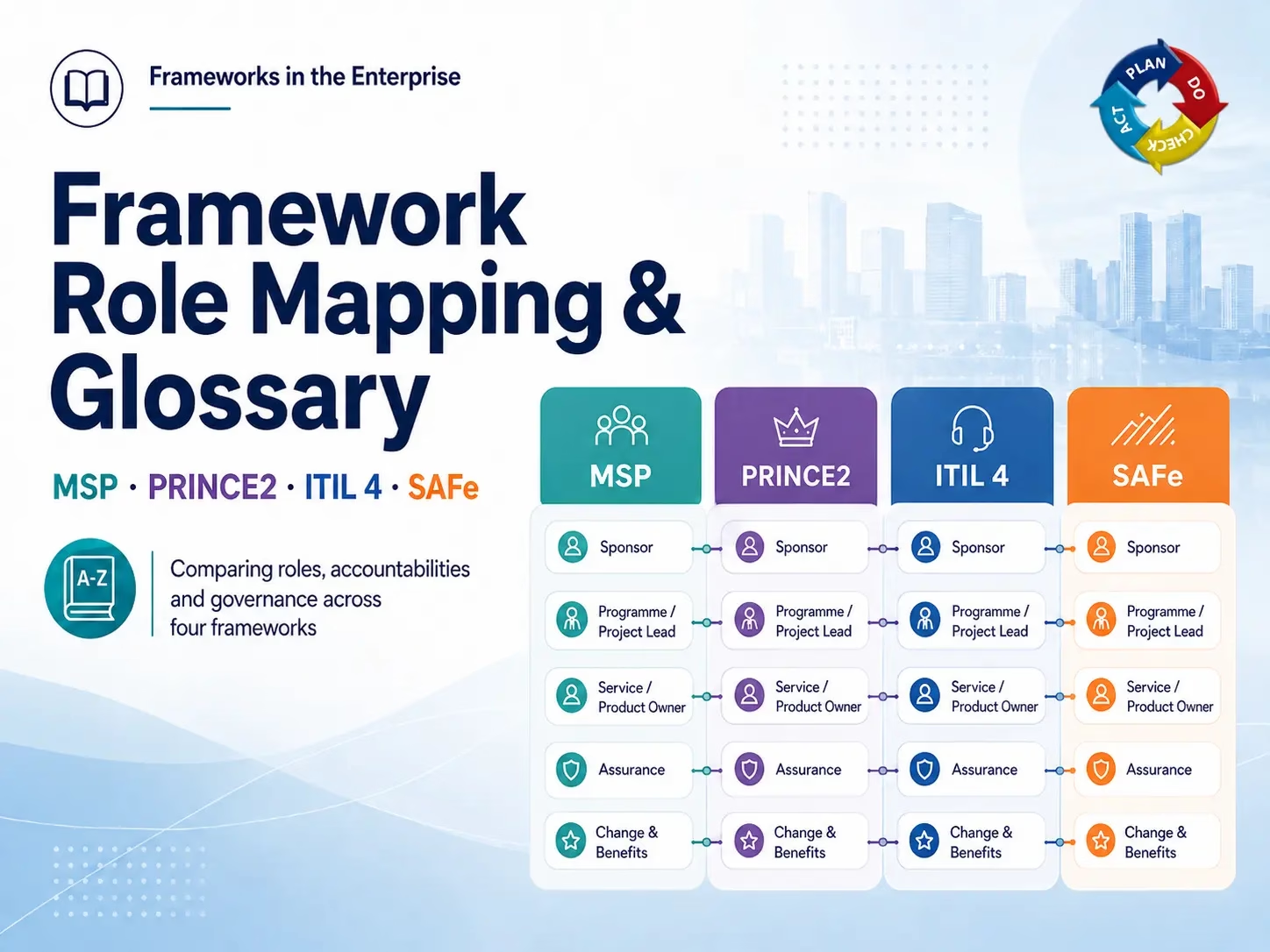
MSP · PRINCE2 · ITIL 4 · SAFe
This table maps equivalent roles and accountabilities across four leading frameworks. Because the frameworks operate at different levels (portfolio, programme, project, product, and service), not every role has a direct one-to-one counterpart, the mapping reflects the closest functional equivalent in each context.
| Theme / Function | MSP | PRINCE2 | ITIL 4 | SAFe |
| GOVERNANCE & SPONSORSHIP | ||||
| Top-level Sponsor / Owner | Senior Responsible Owner (SRO) – Accountable for programme success – Champions vision at board level | Executive – Owns the Business Case – Ultimate decision-maker on the Project Board | Senior Leadership / Service Sponsor – Authorises service investment – Sets policy direction | Business Owner – Accountable for ROI of the ART – Participates in PI Planning |
| Governing Body | Sponsoring Group / Programme Board – Strategic direction – Approves tranches | Project Board – Authorises stages – Exception decisions | Change Advisory Board (CAB) / Governance Board – Approves significant changes – Service performance oversight | Lean Portfolio Management (LPM) – Portfolio governance – Approves Epics and budget allocation |
| STRATEGIC PLANNING & VISION | ||||
| Vision & Blueprint Owner | SRO + Programme Manager – Defines and maintains the Blueprint – Owns Vision Statement | Executive + Senior User – Business Case defines the ‘why’ – Project Brief sets direction | Service Strategy Owner / CIO – Defines service portfolio strategy – Aligns IT to business goals | Business Owners + Product Management – Solution Vision – Strategic Themes feed PI objectives |
| Roadmap / Backlog Owner | Programme Manager (with Design Authority) – Programme Plan – Blueprint change control | Project Manager – Stage Plans – Exception Plans | Product Manager / Service Portfolio Manager – Service pipeline – Retirement decisions | Product Management – Program Backlog (Features) – Prioritises using WSJF |
| PROGRAMME / VALUE STREAM MANAGEMENT | ||||
| Programme / Train Orchestrator | Programme Manager – Day-to-day programme leadership – Manages interdependencies | (Programme-level role, not defined at project level) – Project Manager manages single project – Programme Manager is MSP/MSP-equivalent | Service Owner – End-to-end accountability for a service – Single point of escalation | Release Train Engineer (RTE) – Servant leader for the ART – Facilitates PI Planning & ART events |
| Large-scale Coordination | Programme Manager + Programme Office | Senior Responsible Owner (at programme) / Project Manager | Service Integration Manager (SIAM) | Solution Train Engineer (STE) – Coordinates multiple ARTs within a Solution Train |
| DELIVERY & PROJECT MANAGEMENT | ||||
| Delivery / Iteration Lead | Programme Manager (tranche/project level) | Project Manager – Manages day-to-day delivery – Reports to Project Board | Change Manager / Change Enablement Practice Lead – Manages change schedule – Risk & impact assessment | Scrum Master / Team Coach – Facilitates team ceremonies – Removes impediments |
| Work Package / Team Lead | Project Manager (within programme) | Team Manager – Manages specialist work – Reports to Project Manager | Practice Manager / Team Lead | Team Lead / Engineering Lead |
| PRODUCT & SERVICE OWNERSHIP | ||||
| Product / Service Definer | Business Change Manager (BCM) – Defines benefits realisation – Manages business readiness | Senior User – Defines and validates requirements – Ensures fitness for purpose | Product Manager / Service Level Manager – Owns service catalogue entry – Negotiates SLAs/OLAs | Product Manager – Defines Features in Program Backlog – Owns product roadmap |
| Backlog Prioritiser (Team Level) | Business Change Manager – Prioritises benefit enablers | Senior User / Project Manager – Works with team to clarify scope | Practice Owner / Service Desk Manager | Product Owner (PO) – Maintains & prioritises Team Backlog – Accepts Stories |
| TECHNICAL & ARCHITECTURE | ||||
| Technical Authority | Design Authority – Maintains Blueprint integrity – Technical governance across projects | Senior Supplier – Represents supplier/technical perspective – Accountable for technical quality | Solution Architect / Technical Practice Owner – Architecture decisions – Technology roadmap | System Architect / Engineer – Defines Enabler Features – Guides system-level design |
| Builders / Specialists | Project Delivery Teams | Team Members (specialists under Team Manager) | Technical / Support Staff by Practice | Development Team – Cross-functional – Self-organising Agile teams |
| ASSURANCE & QUALITY | ||||
| Independent Assurance | Programme Assurance (on behalf of SRO) | Project Assurance – Independent of PM – Each Board member has an assurance role | Internal Audit / Service Quality Manager | System Team / Inspect & Adapt – Integration & regression testing – I&A workshop drives improvement |
| Continuous Improvement | Programme Office (lessons learned) – Embedded in tranche reviews | Project Support / Lessons Log – End Stage / End Project Reviews | Continual Improvement Manager / Practice – CSI Register – Metrics-led improvement cycles | RTE + Agile Coaches – Inspect & Adapt (PI cadence) – Communities of Practice |
| SUPPORT & ADMINISTRATION | ||||
| Office / Support Function | Programme Office Manager / Programme Office – Information management – Standards & reporting | Project Support – Administrative support to PM – Configuration management | Service Desk Manager / Service Desk – Single point of contact – Incident logging & triage | Business Owners / Lean-Agile Centre of Excellence (LACE) – Coaching & enablement – Metrics & reporting |
| Risk & Issues Coordinator | Programme Manager + Programme Office – Risk Register – Issue Log | Project Manager + Project Support – Risk Register – Issue Register | Problem Manager / Risk Manager – Problem Record – Known Error Database (KEDB) | RTE + Product Management – ROAM risks in PI Planning – Program Risk Board |
| CHANGE MANAGEMENT & BENEFITS REALISATION | ||||
| Business Change Lead | Business Change Manager (BCM) – Central MSP role – Owns Benefits Realisation Plan – Manages transition & adoption | Senior User + Project Manager – Benefits Review Plan – No dedicated change role in PRINCE2 | Organisational Change Management (OCM) Lead – ITIL 4 recognises OCM as a practice – Embedded in service transition | Business Owner + Product Management – Change Enablement via ART cadence – Feature adoption tracked in OKRs |
| Benefits Tracker | SRO + BCM – Benefits Map – Measured post-tranche | Executive + Senior User – Benefits Review Plan – Post-project review | Service Level Manager / Customer Success – Service metrics vs targets – Value realisation reporting | Business Owners + Product Management – OKRs & Key Results – Measured each PI |
Notes & Key Distinctions
MSP (Managing Successful Programmes)
A UK Cabinet Office standard for programme management. Roles are centred on benefits realisation and managing business change across multiple projects. The Business Change Manager (BCM) is a distinctly MSP role with no direct equivalent in the other frameworks.
PRINCE2 (Projects IN Controlled Environments)
A process-based project management method. The Project Board (Executive, Senior User, Senior Supplier) is the governance triad. PRINCE2 does not define programme-level roles, those are covered by MSP.
ITIL 4 (Information Technology Infrastructure Library)
A framework for IT service management. Roles are oriented around service practices rather than projects. The Service Owner and Product Manager are the closest equivalents to a project manager / programme manager. ITIL 4 introduced Organisational Change Management as a formal practice.
SAFe (Scaled Agile Framework)
An agile framework for enterprise-scale delivery. The Release Train Engineer (RTE) is the closest equivalent to a Programme Manager. The Product Owner operates at team level; the Product Manager operates at programme (ART) level, a distinction often confused with PRINCE2’s Senior User.
Cross-framework caveat
The ‘Business Change Manager’ in MSP and ‘Change Manager’ in ITIL refer to very different things: the former owns organisational change and benefits; the latter manages the IT change control process. Likewise, SAFe’s ‘Business Owner’ has governance accountability but is not a full-time role, unlike MSP’s SRO.
To find out more about PDCA Consulting’s expert consulting services or coaching either:
- Call +49 172 579 4719
- Complete the contact form
- Contact via LinkedIn